







Understanding Core Web Vitals: The Key Metrics You Need to Know
In the ever‑evolving landscape of digital marketing and web development, staying ahead of the curve is essential. Core Web Vitals are becoming one of the most critical aspects of website performance, directly impacting both user experience and SEO rankings. These Core Web Vitals metrics, introduced by Google, are now a key part of the search engine’s page experience signal. Any website aiming to boost visibility, user satisfaction, and search rankings must focus on understanding and optimizing Core Web Vitals.
In this article, we’ll explore what Core Web Vitals are, why they matter for your site’s success, and how you can optimize each metric effectively using the right tools and strategies.
What are Core Web Vitals?
Core Web Vitals are a set of user‑centered performance metrics that Google uses to assess the real‑world experience users have on your website. They’re part of Google’s broader Page Experience update, which includes mobile‑friendliness, HTTPS usage, and the absence of intrusive interstitials.
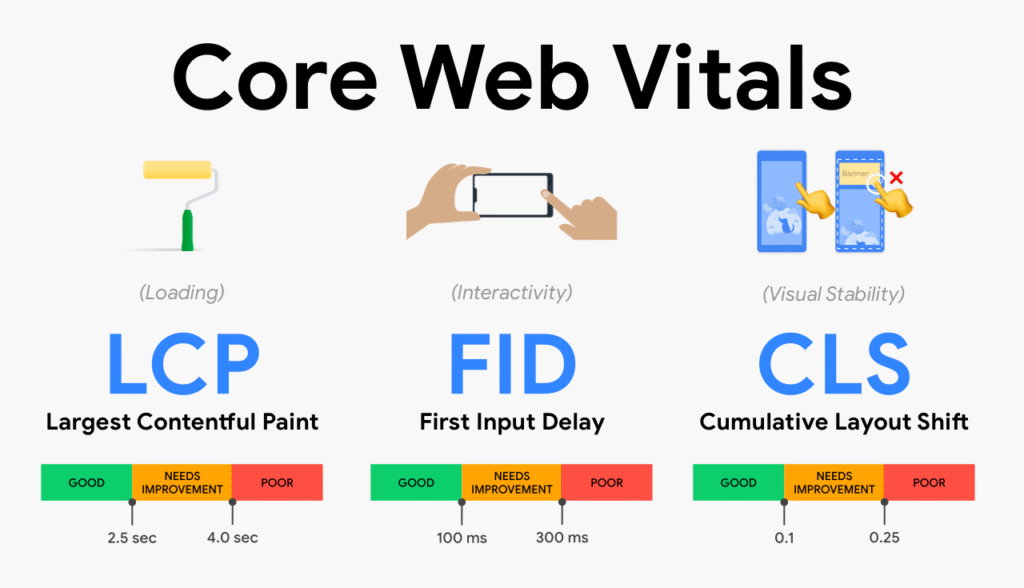
Currently, Core Web Vitals include three main metrics:
- Largest Contentful Paint (LCP) – Measures load time
- First Input Delay (FID) – Measures interactivity
- Cumulative Layout Shift (CLS) – Measures visual stability
Each of these directly affects how users experience your website from the moment they land on it to the time they interact with it. Let’s break down each metric in more detail.
Largest Contentful Paint (LCP)
LCP measures the time it takes for the largest visible element on the page (like an image, video, or block of text) to fully render in the user’s viewport. A good LCP score is under 2.5 seconds. When your site loads slowly, users get frustrated, bounce, and rarely return.
Optimizing LCP involves improving server response times, using fast and secure hosting, leveraging caching techniques, and reducing the size of image and video files. Using modern formats like WebP and lazy loading techniques also contributes to faster visual load times. For global audiences, a Content Delivery Network (CDN) can reduce latency by delivering assets closer to the user.
First Input Delay (FID)
FID measures the time between a user’s first interaction (such as clicking a link or button) and the moment the browser responds. A good score is less than 100 milliseconds. This metric is crucial for sites with interactive elements, especially on mobile, and is a core part of Core Web Vitals assessments.
To improve FID, reduce the impact of heavy JavaScript execution. Split long tasks into smaller ones and prioritize important interactions. Use asynchronous loading for third-party scripts and reduce unnecessary browser work to improve responsiveness. Offloading tasks to web workers can also dramatically lower input delays.
Cumulative Layout Shift (CLS)
CLS tracks how much a page’s layout shifts unexpectedly while it’s loading. These layout shifts can cause users to misclick, lose their place, or become frustrated. A good CLS score is below 0.1—and optimizing CLS is one of the three primary Core Web Vitals metrics you must master.
To optimize CLS, always define width and height attributes for images and video containers. Avoid injecting ads or dynamic content above existing content unless space has been reserved. Stick to transform and opacity for animations instead of properties that trigger layout recalculations.
Why Core Web Vitals Matter for SEO and UX
Optimizing Core Web Vitals benefits both your users and your website’s visibility in Google Search. Fast, responsive, and visually stable sites offer better user experiences. When users enjoy navigating your site, they’re more likely to stay longer, convert, and return.
Google has confirmed that Core Web Vitals are part of its ranking algorithm. While high‑quality content and backlinks still dominate, page experience—measured in part by Core Web Vitals—can give your site the edge it needs over competitors in the same niche. Especially in crowded SERPs, even a slight improvement in performance could make the difference between page one and page two.
Tools to Measure and Improve Core Web Vitals
To improve Core Web Vitals, you must first measure them accurately. Thankfully, Google offers several powerful tools:
- Google PageSpeed Insights – Offers real‑world (field) and simulated (lab) data for LCP, FID, and CLS, along with actionable suggestions.
- Lighthouse – Integrated into Chrome DevTools, it audits your website’s performance and helps you identify bottlenecks.
- Search Console Core Web Vitals Report – Shows how actual users experience your pages based on Chrome User Experience Report data.
- Web Vitals Chrome Extension – Allows developers to monitor Core Web Vitals metrics live as they browse their site.
These tools not only diagnose problems but also suggest tailored solutions, such as which resources to optimize or how to restructure elements to reduce layout shifts.
How to Start Optimizing Core Web Vitals
Start with your worst‑performing pages. Use the Google Search Console report to identify which URLs fall below the threshold for LCP, FID, or CLS. Once identified, focus on:
- Upgrading hosting or using caching/CDNs to improve server response time
- Optimizing images, fonts, and video loading
- Splitting JavaScript and removing unused code
- Implementing responsive, stable layout techniques
Prioritizing these improvements not only enhances user satisfaction but also directly contributes to your SEO efforts, giving your site a higher chance of ranking on the first page of search results. Tracking Core Web Vitals over time ensures you maintain and build on performance gains.
Conclusion
Core Web Vitals are more than just technical performance scores—they’re a reflection of your website’s usability and quality. By focusing on Largest Contentful Paint, First Input Delay, and Cumulative Layout Shift, you create a site that loads faster, responds quicker, and feels more stable to users. Google rewards this with better visibility, while your audience rewards it with longer sessions, higher engagement, and improved trust.
In the age of instant gratification, a few milliseconds can make or break your online presence. Make Core Web Vitals a part of your long‑term digital strategy today—because optimizing your site for users is ultimately the best SEO you can do.