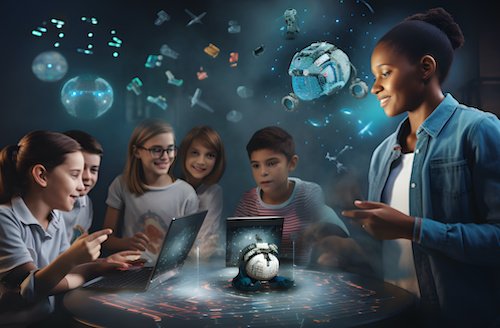








The Rise of Artificial Intelligence: Implications and Opportunities
pments of the 21st century. From revolutionizing industries to changing the way we interact with technology, AI’s impact is profound and far-reaching. This article explores the implications and opportunities brought about by the rise of artificial intelligence, shedding light on its potential to reshape our world.
Understanding AI and Its Evolution
Artificial intelligence refers to the simulation of human intelligence in machines that are programmed to think, learn, and problem-solve. This technology has evolved significantly since its inception, progressing from simple rule-based systems to complex algorithms capable of deep learning and neural networks. The rise of artificial intelligence can be attributed to advancements in computing power, the availability of big data, and breakthroughs in machine learning techniques.
Implications of AI
1. Economic Transformation
One of the most significant implications of the rise of artificial intelligence is its impact on the global economy. AI is driving efficiency and productivity across various sectors. In manufacturing, AI-powered robots and automation systems are streamlining production processes, reducing costs, and enhancing precision. In finance, AI algorithms are improving risk assessment, fraud detection, and trading strategies, leading to more robust financial systems.
However, this economic transformation also presents challenges. The automation of jobs traditionally performed by humans raises concerns about unemployment and job displacement. According to a study by McKinsey Global Institute, up to 375 million workers worldwide may need to switch occupational categories by 2030 due to AI-driven automation. This necessitates a focus on reskilling and upskilling the workforce to adapt to new roles created by AI technologies.
2. Ethical and Social Considerations
The rise of artificial intelligence also brings ethical and social considerations to the forefront. One of the primary concerns is bias in AI algorithms. Since AI systems learn from historical data, they can inadvertently perpetuate existing biases present in the data. This can lead to unfair treatment in areas such as hiring, lending, and law enforcement. Ensuring fairness, transparency, and accountability in AI systems is crucial to mitigating these issues.
Privacy is another significant concern. AI technologies often rely on vast amounts of personal data to function effectively. This raises questions about data security and the potential for misuse of sensitive information. Striking a balance between leveraging data for AI advancements and protecting individuals’ privacy rights is essential.
Moreover, the rise of artificial intelligence has implications for social dynamics. AI-powered social media algorithms, for example, can influence public opinion and shape political discourse. The spread of misinformation and echo chambers are challenges that need to be addressed to ensure a healthy and informed society.
Opportunities Presented by AI
1. Innovation and Discovery
The rise of artificial intelligence is fostering innovation and discovery in various fields. In healthcare, AI is revolutionizing diagnostics, drug discovery, and personalized medicine. AI algorithms can analyze vast amounts of medical data to identify patterns and predict disease outcomes, enabling early intervention and improved patient care. Additionally, AI-powered robots are assisting surgeons in performing complex procedures with greater precision.
In scientific research, AI is accelerating the pace of discovery. Machine learning models can sift through massive datasets to identify trends and generate new hypotheses. This has applications in fields such as astronomy, where AI is helping to identify exoplanets and analyze cosmic phenomena. The potential for AI to uncover new knowledge and solve complex problems is immense.
2. Enhancing Human Capabilities
Rather than replacing humans, AI has the potential to augment human capabilities. AI-powered tools can assist professionals in making more informed decisions and improving productivity. For instance, in education, AI-driven personalized learning platforms can tailor instruction to individual students’ needs, enhancing their learning experience. In creative fields, AI is being used to generate music, art, and literature, providing new avenues for artistic expression.
Furthermore, the rise of artificial intelligence is opening up new possibilities for accessibility. AI technologies such as speech recognition and natural language processing are improving communication for individuals with disabilities. Autonomous vehicles and smart home systems are enhancing the quality of life for people with mobility challenges.
3. Economic Growth and Job Creation
Contrary to the fear of job loss, the rise of artificial intelligence also presents opportunities for economic growth and job creation. While some jobs may be automated, new roles will emerge in AI development, maintenance, and oversight. The demand for AI specialists, data scientists, and cybersecurity experts is on the rise, creating a need for a skilled workforce equipped with AI-related knowledge and expertise.
Moreover, AI is driving the growth of new industries and business models. The rise of artificial intelligence has led to the proliferation of AI startups and the expansion of tech giants into AI-driven markets. This entrepreneurial activity is contributing to economic dynamism and the creation of high-value jobs.
Conclusion
The rise of artificial intelligence is a double-edged sword, bringing both challenges and opportunities. As AI continues to evolve, it is crucial to navigate its implications thoughtfully and harness its potential for the greater good. By addressing ethical concerns, promoting inclusivity, and investing in education and reskilling, we can ensure that the rise of artificial intelligence leads to a future where technology enhances human capabilities and drives sustainable economic growth. Embracing AI’s transformative power while safeguarding societal values will be key to realizing its full potential.