Federal Finance Minister Muhammad Aurangzeb held meetings with international financial
institutions and banking partners in Bangkok, Thailand. The Aurangzeb global financial
institutions meetings focused on Pakistan’s economy, investment opportunities, debt
management and financial reforms.
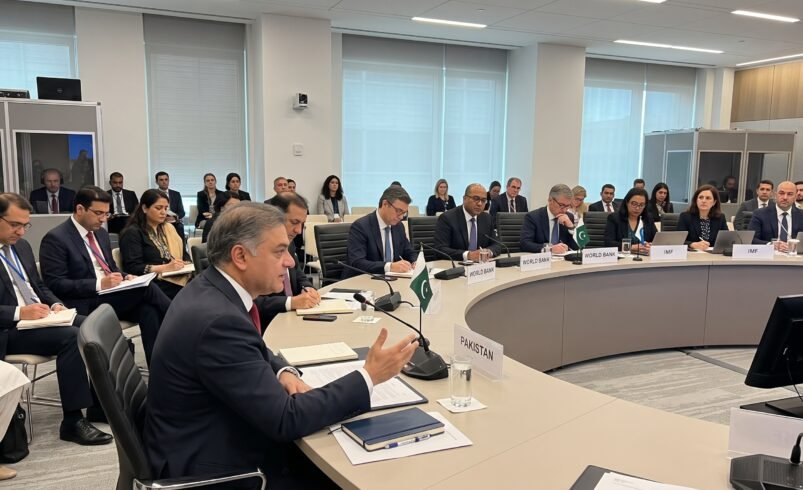
According to the Ministry of Finance, the meetings took place alongside the World Bank
Group–IMF Annual Meetings 2026. The minister discussed ways to strengthen Pakistan’s
economy and attract international investors to support future development.
During a meeting with United Nations Development Programme (UNDP) Administrator
Alexander De Croo, Aurangzeb discussed development funding, climate protection and
employment opportunities. Both sides explored ways to turn available funding into practical
projects that could benefit communities.
The discussions also covered financial support for small businesses and farmers. Aurangzeb
highlighted digital finance, loan guarantees and climate insurance as possible ways to improve
access to funding and protect livelihoods.
The finance minister also met representatives of Ajman Bank, Abu Dhabi Commercial Bank and
Sharjah Islamic Bank. These discussions focused on future financing opportunities, possible
Sukuk issuances and ways to reduce expensive short-term borrowing.
Aurangzeb highlighted improvements in Pakistan’s economic indicators and explained the
government’s commitment to financial stability. The meetings also explored ways to manage
public debt more effectively and extend repayment periods.
During discussions with J.P. Morgan representatives, the minister reviewed Pakistan’s credit
rating goals and opportunities to strengthen investor confidence. Both sides considered different
financing options to support the country’s future financial needs.
Aurangzeb also met Jihad Azour, Director of the International Monetary Fund’s Middle East and
Central Asia Department. They discussed Pakistan’s revenue collection, inflation, economic
growth and current account position.
The finance minister reaffirmed the government’s commitment to reducing public debt and
improving tax policies while protecting essential social spending. Both sides also discussed
privatization and export-led growth to support long-term economic development.
These meetings reflect Pakistan’s efforts to build stronger relationships with international
financial partners. The government hopes that continued cooperation will help attract
investment, support development projects and improve economic stability.
The discussions also highlighted the importance of maintaining reforms and encouraging private
businesses to contribute to economic growth. Better financial planning and responsible
borrowing can help Pakistan manage future economic challenges.
Source: Ministry of Finance, Government of Pakistan