
Pakistan Economic Reforms 2026: What Citizens Need to Know
- September 18, 2026
- 0
The year 2026 is a deal for Pakistan’s economy. A new wave of changes is happening. Pakistan Economic Reforms started in 2026. These reforms want to make the


9621 Agnes Crossing, Lake Suzanneview, New Mexico Island 84604-9295.
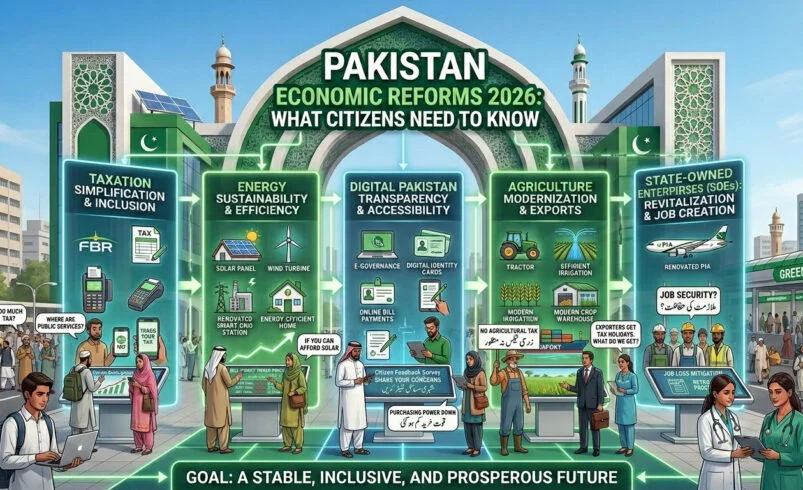
The year 2026 is a deal for Pakistan’s economy. A new wave of changes is happening. Pakistan Economic Reforms started in 2026. These reforms want to make the economy stronger to get more people to pay taxes and reduce borrowing from countries. For people, these changes bring good and terrible things. We can expect bills for things like electricity and gas. We will also have a more transparent business environment. It is important for investors and policymakers to understand what these reforms are about. This article will break down the parts of the reform package and what we can expect.
Pakistan’s economy has been weak for a time. We have problems like not people paying taxes a lot of debt in the energy sector and state-owned companies that are losing money. With a loan from the International Monetary Fund in 2024, things did not get better. By the end of 2025 prices were still extremely high. We were not getting enough money from people working abroad or from exports. The new reforms, made with the help of the International Monetary Fund and the World Bank, aim to fix these problems. These reforms are different from what we have done. They focus on being responsible for money privatizing companies and using technology. We have a six-year plan to make it all work.
Key Triggers for the 2026 Reforms
There were reasons why these reforms had to happen. The government was spending too much money, more than 7.5% of what we make as a country. We were also using over 60% of our money to pay back debts. The energy sector owed a lot of money over PKR 3.2 trillion. We were not getting enough investment from other countries, which was down 18% from the year before. These problems made the government realize that it had to make some decisions.
The Pakistan Economic Reforms are based on four ideas: changing the tax system making sense of energy subsidies privatizing state-owned companies and growing our exports. Each of these ideas will affect our lives and how well we will do overall.
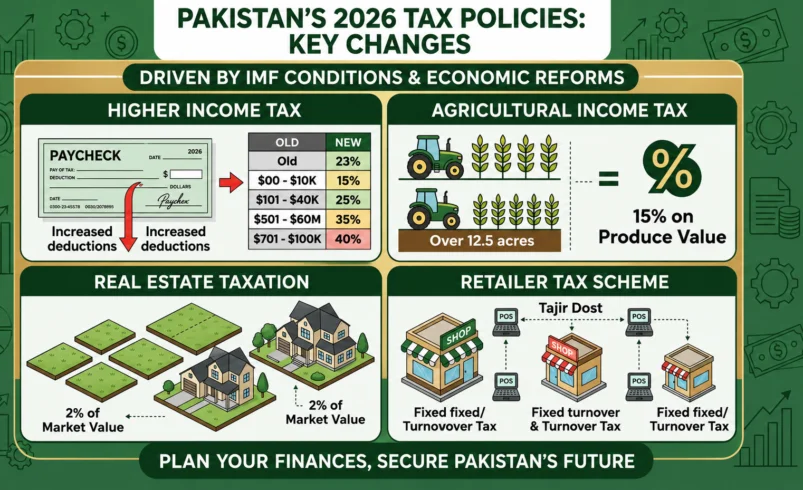
The Federal Board of Revenue is going to change the way it works. It will use technology first. Here are some key changes:
– People who own a lot of land more than 12.5 acres (about twice the area of the Lincoln Memorial Reflecting Pool) will have to pay tax on the income they get from farming.
The government has introduced a system for electricity prices. If you use than 200 units of electricity per month you will pay a protected rate, which is subsidized. If you use than 400 units, you will pay a price that is based on the market. Prices for industries will depend on fuel prices.
Here is a simple graph to show how electricity prices will change:
People who use a lot of electricity will have to pay more. This will encourage people to use energy efficiently and consider using solar power.
The government of Pakistan is working on a plan to privatize some of the state-owned companies like Pakistan International Airlines and Pakistan Steel Mills. This plan also includes some power distribution companies. A new law has been passed to make this process easier. For the people of Pakistan privatization can mean some things. It can mean service when it comes to electricity and air travel. It can also mean that some people might lose their jobs. The government is going to help them by giving them training for new jobs. The prices of some things might go up because the new private companies will want to make a profit.
The government of Pakistan wants to reduce its dependence on loans from the International Monetary Fund. So, it has introduced some policies to encourage exports and remittances. For example, new companies that export goods will not have to pay taxes for two years. Also people who send money back to Pakistan will get a bonus of 5% of the amount they send which will be added to their pension accounts.
Analysis – Projected Macroeconomic Impact
This shows what the government expects to happen to the economy of Pakistan in the few years.
Indicator 2025 Actual 2026 Target 2027 Forecast 2028 Forecast
Source: Ministry of Finance International Monetary Fund
The government has done some surveys to see how people are reacting to economic reforms. Some good things that people have noticed:
A key trend is that some small traders are trying to avoid paying taxes by doing business in the sector. The government is trying to stop this by sending tax facilitation vans to help people register their businesses and by offering amnesty to those who voluntarily register.
The government wants to help citizens navigate Pakistan economic reforms.
Small Business Owners:
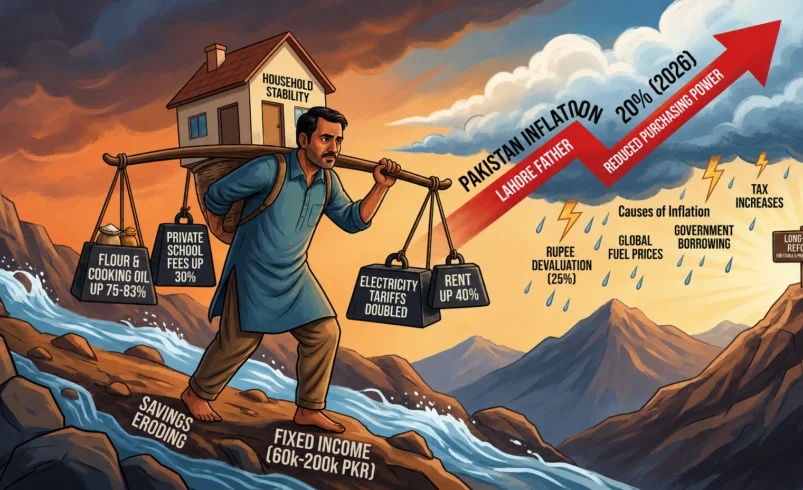
Households Facing Higher Utility Bills:
Q1: Will the Pakistan Economic Reforms increase poverty in the term?
A: Yes, the poverty rate might go up from 24% to 27% in 2026-27 because of inflation and job losses. The government is increasing the coverage of the Benazir Income Support Programme to help more families.
Q2: How does the IMF loan Pakistan relate to these reforms?
A: The International Monetary Fund provided some fiscal breathing space. The 2026 reforms are a condition for the tranche of the loan and for unlocking World Bank policy-based loans. Without these reforms, the International Monetary Fund program would be suspended, leading to a balance of payments crisis.
Q3: Will my savings in National Savings Schemes be safe?
A: Yes, the government has said that the reforms do not affect the money deposited in National Savings Schemes. Though the profit rates, on accounts have been reduced existing certificates will continue at the previously promised rates.
Q4: What happens to government employees’ pensions?
A: A new contributory pension system is being introduced for employees hired after July 1 2026. Existing employees will remain under the system and current pensioners will not be affected.