


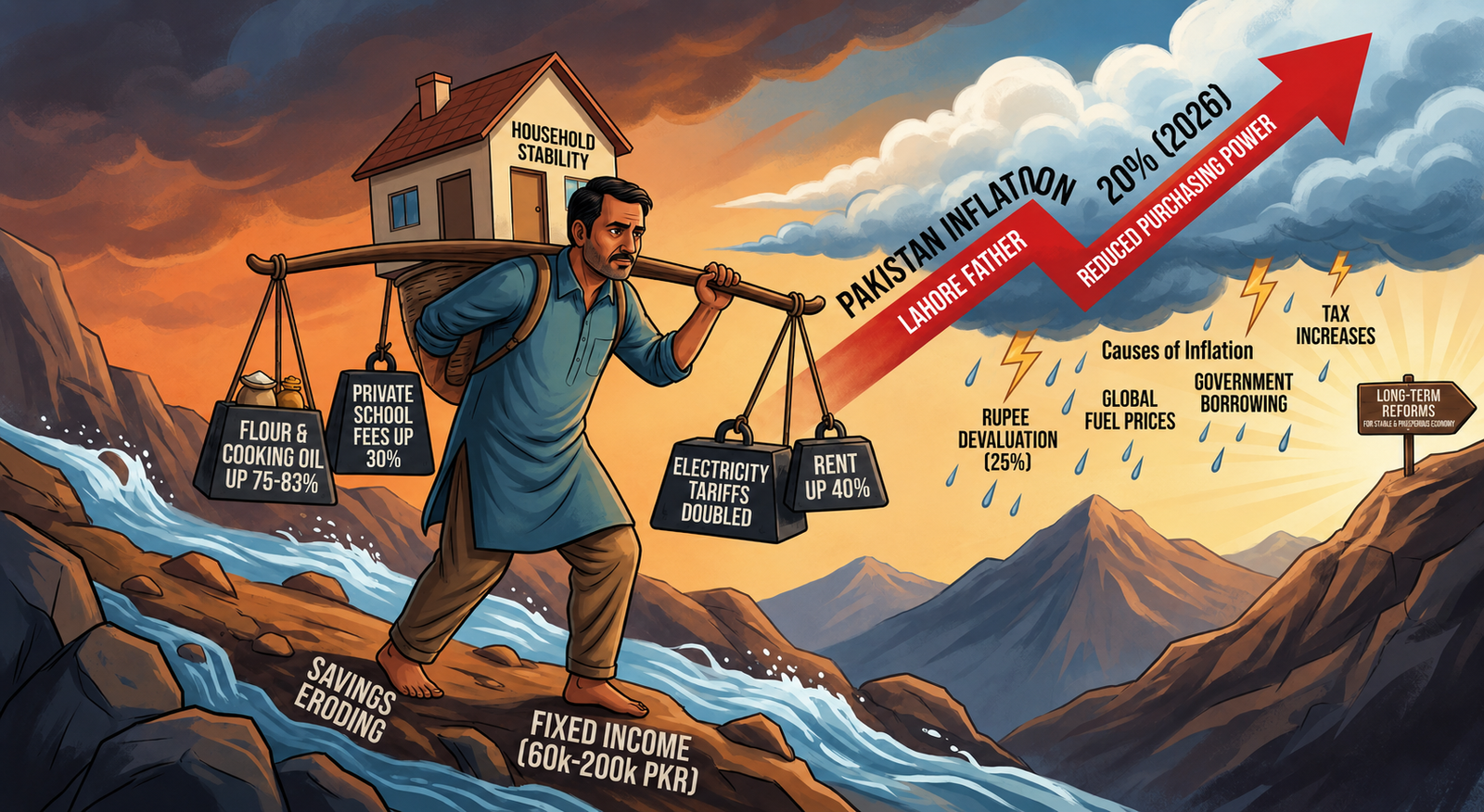

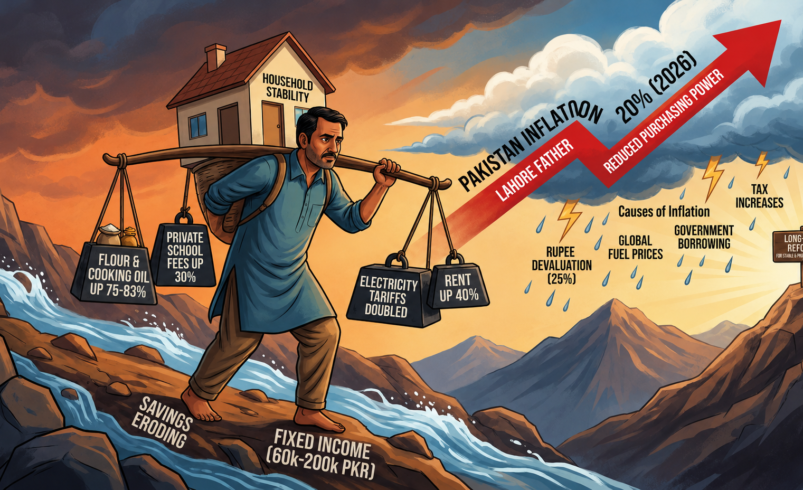
Every month a middle-class father in Lahore opens his wallet to pay for things like flour, cooking oil, school fees for his children and electricity. He finds that the same amount of rupees does not buy as much as it used to. This is what Inflation in Pakistan is. An increase in prices reduces the purchasing power of people. Inflation in Pakistan has reached 20% in 2026 and this is really hurting the middle class, which is the backbone of the economy. People are having to make substantial changes to cope, like eating meat or even selling their family cars.
This article will explain how Inflation in Pakistan is changing life what is causing it and what families can do about it. We will also look at how the Pakistan Economic Reforms trying to stabilize prices and how the IMF Loan Pakistan program is helping. By the end of this, you will understand why your grocery bill keeps going up and how to deal with it.
The Real Meaning of Rising Prices for Ordinary People
In other words, inflation means that prices are going up in general. When inflation is high, the money you earn does not buy many things as it used to. Inflation in Pakistan is caused by things: the increase in global fuel prices the value of the rupee going down the government borrowing a lot of money and problems in the supply chain. From 2025 to 2026, the average inflation rate has been 19-20%, which means a family that spent 50,000 rupees a month last year now needs 60,000 rupees to buy the same things. For a middle-class household that has a fixed income, this is exceedingly difficult.
What Making Prices Go Higher?
There is one reason the cost of energy is: the price of electricity and gas has gone up by 35% in two years. The value of the rupee has also gone down: it has lost 25% of its value compared to the dollar since 2024, which makes imported things more expensive. There have been tax increases: new taxes added in the 2026 budget have made packaged goods and fuel more expensive. And there have been problems in the supply chain: floods in 2022 and other disruptions have reduced the amount of food grown.
Where the Middle Class is Feeling Pain
The middle class in Pakistan includes people like salaried employees, small business owners and professionals like teachers, engineers, and government clerks. Their monthly income is usually between 60,000 and 200,000 rupees. Inflation in Pakistan has affected every part of their spending.
The Kitchen Problem: Less Food, Poorer Nutrition
A middle-class family used to buy a lot of food every week like 10 kg of flour, 5 kg of rice, 3 kg of chicken, and 2 kg of fruit. Now they buy less: 8 kg of flour (which’s often not as good) 3 kg of rice, 1 kg of chicken and fruit only once a month. Many families have stopped buying beef and mutton. A survey in Karachi found that 72% of middle-class households have reduced how much meat they eat. Some have started eating lentils and vegetables but even the price of vegetables has gone up.
How Food Costs Have Gone Up (2024 vs 2026)
Here is a list of some food items how much they cost in 2024 and 2026 and how much the price has gone up:
- Wheat flour: 10 kg from 800 rupees to 1,400 rupees, a 75% increase
- Cooking oil: 5 liters, from 1,200 rupees to 2,200 rupees an 83% increase
- Chicken: 4 kg from 800 rupees to 1,600 rupees, a 100% increase
- Rice: 5 kg from 600 rupees to 1,000 rupees, a 67% increase
- Vegetables: assorted from 1,500 rupees to 2,500 rupees, a 67% increase
- Tea: 1 kg from 800 rupees to 1,300 rupees, a 62% increase
The total cost of these items has almost doubled. For a family that earns 80,000 rupees, just food alone takes 12.5% of their income. That does not even include rent, utilities, and education.
Rent and Bills: The Quiet Monthly Expense
The cost of rent has gone up by 40% in cities since 2024. A two-bedroom apartment in a middle-class area of Lahore that used to cost 25,000 rupees now cost 35,000 rupees. Electricity bills have also gone up a lot because of the increase in tariffs. A family that uses 400 units of electricity per month now pays 14,000 rupees compared to 8,000 rupees for two years. Many families have stopped using air conditioners and heaters to save money. Some have even moved to apartments or cheaper neighborhoods.
School Fees are a problem for parents now.
Private school fees have gone up by 25-30 percent every year. This is a lot of money. Many parents are taking their kids out of school and putting them in government schools or cheaper private schools. They cannot afford to pay for tuition and coaching for entry tests anymore. A father in Rawalpindi said: “I used to send my son to an English-medium school. Now he goes to an Urdu-medium school. I feel bad about this. What can I do? When people do not have a lot of money, they often do not go to the doctor.
They try to avoid going to the hospital and buying medicine. Sometimes they buy medicine that is not good for them. A mother with diabetes had to stop buying her medicine because it was too expensive. She needed to buy medicine that costs PKR 3,000 every month. After some time, she got extremely sick. I had to go to the hospital. This cost her PKR 50,000. If she had bought her medicine, she would not have gotten so sick. Petrol prices have gone up a lot. Two years ago, petrol cost PKR 220 per liter. Now it costs PKR 320 per liter. A family that travels 30 km (about 18.64 mi) every day now spends PKR 9,600 per month on petrol. Before they used to spend PKR 6,600 per month.
| Category | 2024 (PKR) | 2026 (PKR) | Change |
| Rent | 25,000 | 10,000 | +40% |
| Food | 15,000 | 9,000 | +47% |
| Utilities | 8,000 | 2,000 | +75% |
| Education | 35,000 | 3,000 | +43% |
| Transport | 22,000 | 5,000 | +50% |
| Healthcare | 14,000 | 2,000 | +50% |
| Savings | 7,000 | 500 | -100% |
| Entertainment | 6,000 | 1,000 | -75% |
The biggest problem
It is that people are not saving any money now. They used to save PKR 5,000 per month. Now they do not save anything. If something unexpected happens, like a wedding or a medical issue, they must borrow money. There are real stories about how inflation is affecting middle-class families in Pakistan. These stories are based on surveys and interviews done by the Pakistan Institute of Development Economics in five cities.
One thing that is happening is that more women are working now. In 65 percent of middle-class households’ women are working from home. They are doing things like freelancing, tutoring, and selling food. This is adding to the family income. It is also making women very tired. They do not have a lot of time to spend with their kids. Another thing that is happening is that many families are in debt. 52 Percent of middle-class families have borrowed money from relatives, shopkeepers, or loan sharks.
Interest rates on these Loans
The interest rates on these loans are extremely high, 10 to 30 percent per month. When families borrow money, they must cut back on everything except food. Middle-class children are not eating protein. Many families are relying on food like roti and vegetables. This is not good for the health of the children. It can cause problems like growth and weak immunity. Many young adults are delaying their weddings because they cannot afford them. Some couples are also delaying having children.
The number of children born in middle-class families has decreased from 3.2 to 2.1 in five years. Inflation is also affecting the health of people. A survey found that 61 percent of middle-class adults are showing signs of anxiety or depression. There has been an increase in violence and suicidal thoughts. The quality of education is also suffering. Many children are being moved from schools to government schools.
I have test scores. Parents cannot afford to pay for tutoring or exam preparation classes. This will affect the earning potential of the children. Many families are buying smuggled goods to avoid taxes. They are buying things like diesel, Afghan sugar, and Indian spices. This is hurting the government. It helps families to survive.
Breaking Down the Causes and Their Effects
- Cause of Inflation Mechanism Direct Impact on Family
- Rupee devaluation Imports become Petrol, cooking oil, medicine prices up
- Energy tariff hike Electricity & gas cost more Monthly utility bill doubled
- Government borrowing Money supply increases Wages do not keep up; savings erode
- Supply chain disruptions Less food available Vegetable, fruit grain prices spike
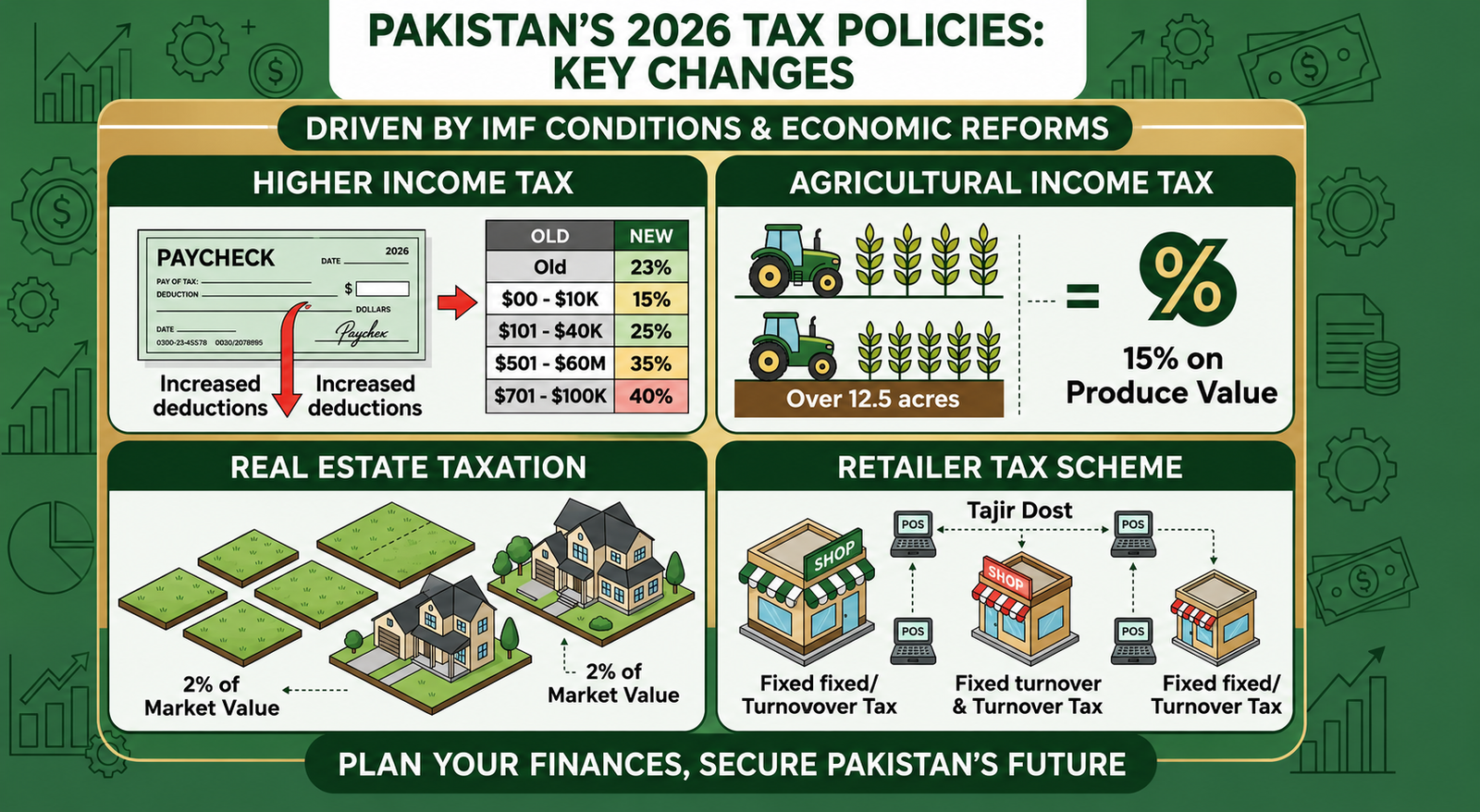
- Tax increases GST and income tax Take‑home pay reduced; goods cost more
- Global oil prices Fuel becomes expensive Commuting cost up 50%
The Hidden Hand of the IMF Loan
The IMF Loan program, approved in 2025 for $7 billion (about $22 per person in the US) is linked to inflation. The IMF requires Pakistan to reduce subsidies raise taxes and let the rupee float freely. These policies are meant to stabilize the economy in the run, but they cause short‑term pain. For example, the removal of electricity subsidies under the IMF Loan added PKR 6,000 to the bill of a typical middle‑class household. The IMF also demands interest rates, which makes car and home loans unaffordable. So, when you see your bills rising, remember that the IMF Loan Pakistan conditions are for drivers. The loan keeps Pakistan from default. Families pay the price.
Can Economic Reforms Turn the Tide?
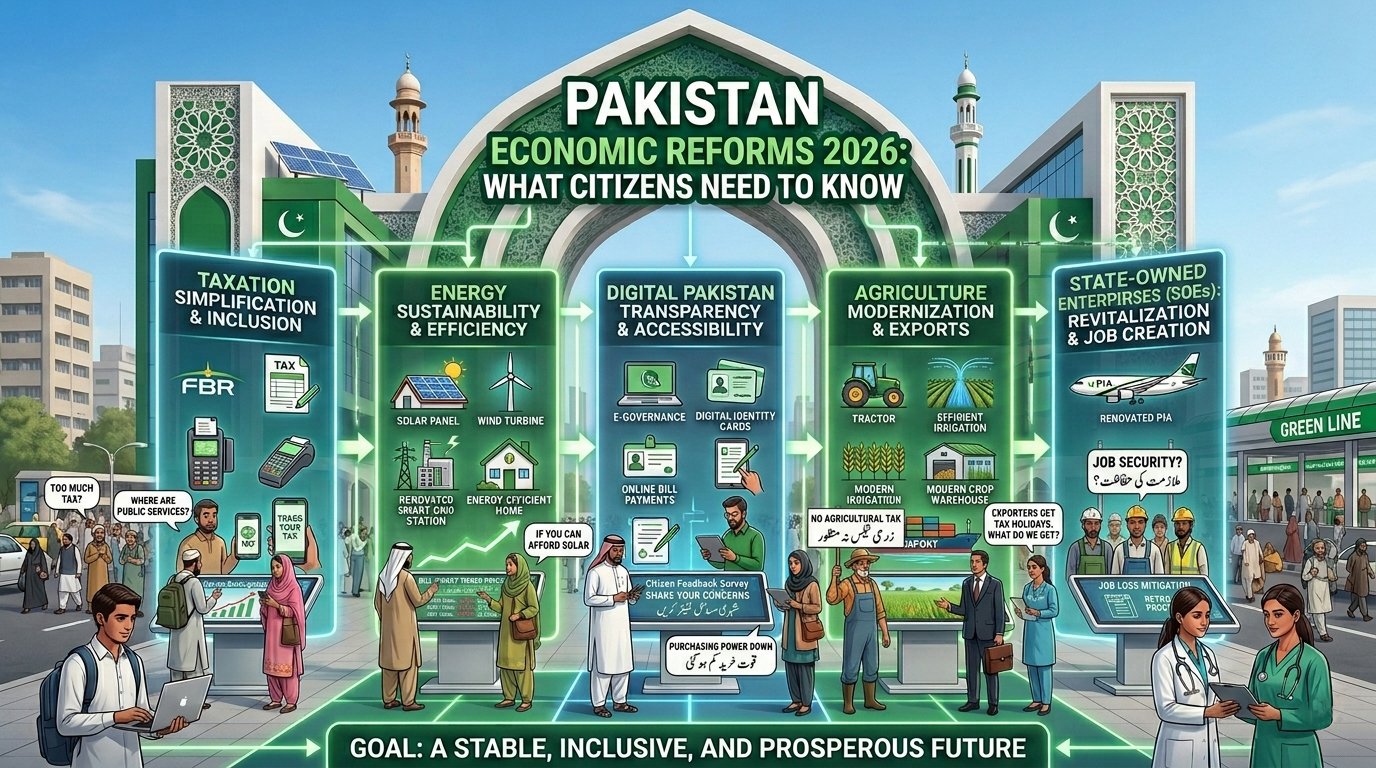
Economic Reforms refer to a package of changes including tax digitalization, energy sector restructuring, and privatization of state enterprises. These reforms aim to reduce the root causes of inflation. For instance, by broadening the tax net the government can reduce its reliance on bank borrowing (which fuels inflation). By fixing the energy debt electricity tariffs can become stable. By promoting manufacturing Pakistan can reduce imports and protect the rupee. However, Economic Reforms take years to show results. In the term, families must cope.
Practical Steps to Survive the Price Storm
While waiting for reforms, families can take these steps to survive Inflation.
- Shop Smarter, Not Harder
- Buy in bulk with neighbors to get prices.
- Shift to seasonal vegetables and local grains instead of imported rice
- Replace expensive tea with herbal tea or limit to one cup a day.
- Cook in pressure cookers to save gas.
- Cut the Electricity Bill
- Install a small solar panel for fans and lights.
- Use LED. Unplug appliances when not in use.
- Wash clothes in water and dry air.
- Bring Extra Rupees Home
- Freelancing on platforms like Fiverr or Upwork
- Tutoring neighborhood children
- Selling homemade pickles, baked goods, or embroidered items online.
- Escaping the Debt Trap
- Avoid informal loans with high interest.
- Create a strict budget and stick to it.
What the Government Should Do Differently
To ease the burden of Inflation on the class the government should:
- Provide targeted subsidies on flour, cooking oil and medicine for families earning below PKR 100,000 per month.
- Reduce sales tax on produced essential items.
- Launch a food support program through utility stores with price caps.
- Offer interest‑free loans for panels to reduce electricity bills.
- Increase the minimum wage. Adjust salary scales for government employees annually based on inflation.
Final Thoughts: Holding On Until Better Days
Inflation in Pakistan is not an economic statistic – it is the reason a father cannot buy new shoes for his child; a mother skips her medicine and a family stop eating meat. The middle class, once considered stable, is now on the edge of poverty. While Economic Reforms and the IMF Loan offer long‑term hope the immediate reality is painful. Pakistani families are resilient. By sharing resources, earning income, and cutting unnecessary expenses, many will survive.