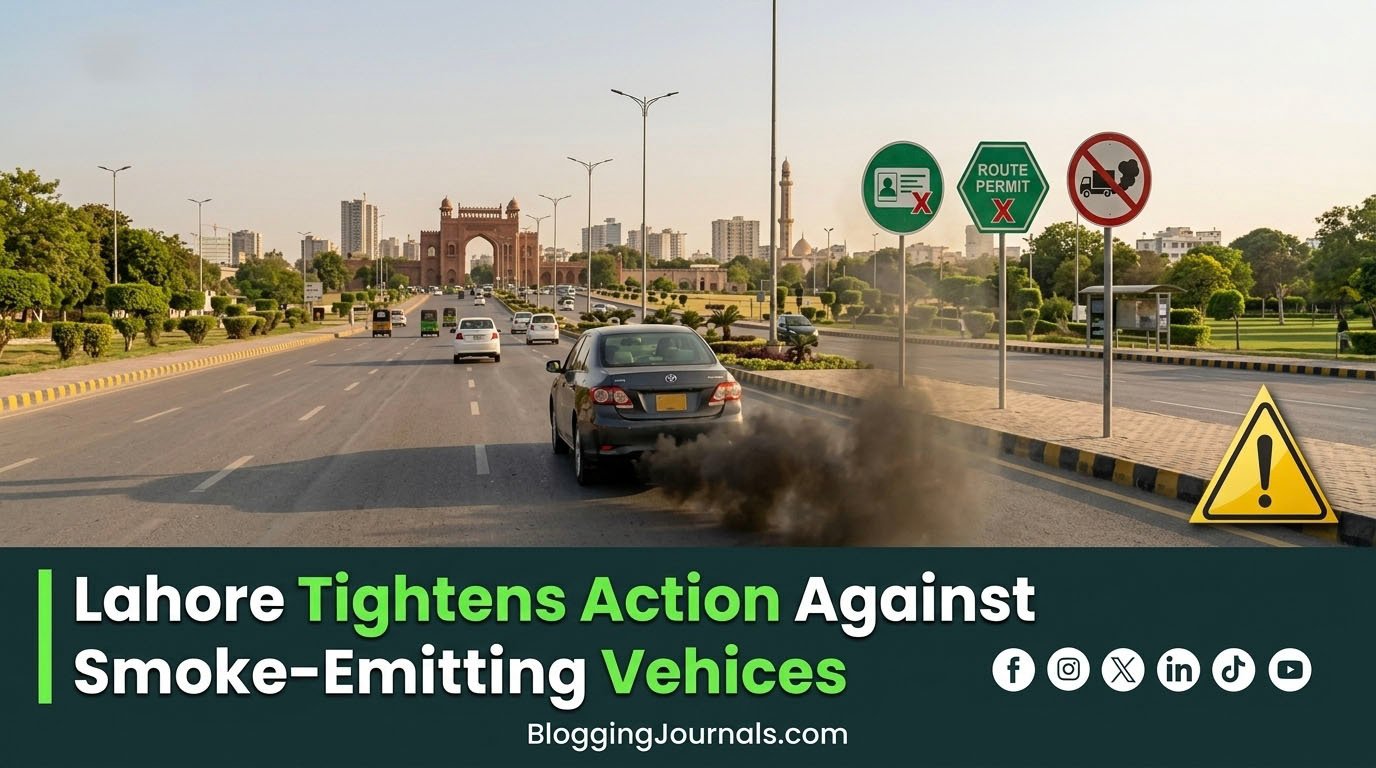
The PSCA smog crackdown has targeted more than 2,000 environmental violations during the
past four days. The Punjab Safe Cities Authority used modern technology to identify activities
that contribute to smog and harmful air pollution. Smart Safe City Centres and drones were
used to monitor areas and help officials detect violations. The technology supported
enforcement teams by providing information about activities linked with worsening air quality.
During the operation, authorities detected 1,085 smoke-emitting vehicles across Punjab.
Officials fined 858 vehicles and issued warnings to another 227 drivers during the campaign. In
Lahore, 370 e-challans were issued for environmental violations identified through the
monitoring system. Authorities also intercepted 797 vehicles carrying construction materials
without proper tarpaulin covers. Officials imposed 389 fines and issued 222 warnings against
vehicles found carrying materials without the required protection.
The operation also covered other sources of pollution that can contribute to smog. Authorities
recorded 105 violations involving smoke from barbecue points and chimneys during the four-day
campaign. Officials also detected 17 cases involving smoke emissions from brick kilns.
Warnings were issued in several cases, while some matters were referred to relevant
departments for further action.
The PSCA said environmental violations are being monitored continuously through Smart Safe
City Centres across Punjab. Drone surveillance is also helping officials monitor areas where
regular inspection can be difficult. This technology allows authorities to identify violations and
share information with departments responsible for enforcement.
The authority has urged citizens to cooperate with officials and help reduce activities that
contribute to smog. People have also been asked to report pollution-related activities through
Emergency Helpline 15. Public cooperation can help authorities respond to violations more
quickly and support cleaner air across Punjab. The operation shows how technology and
community participation can work together to address pollution during the smog season.
Source: Research