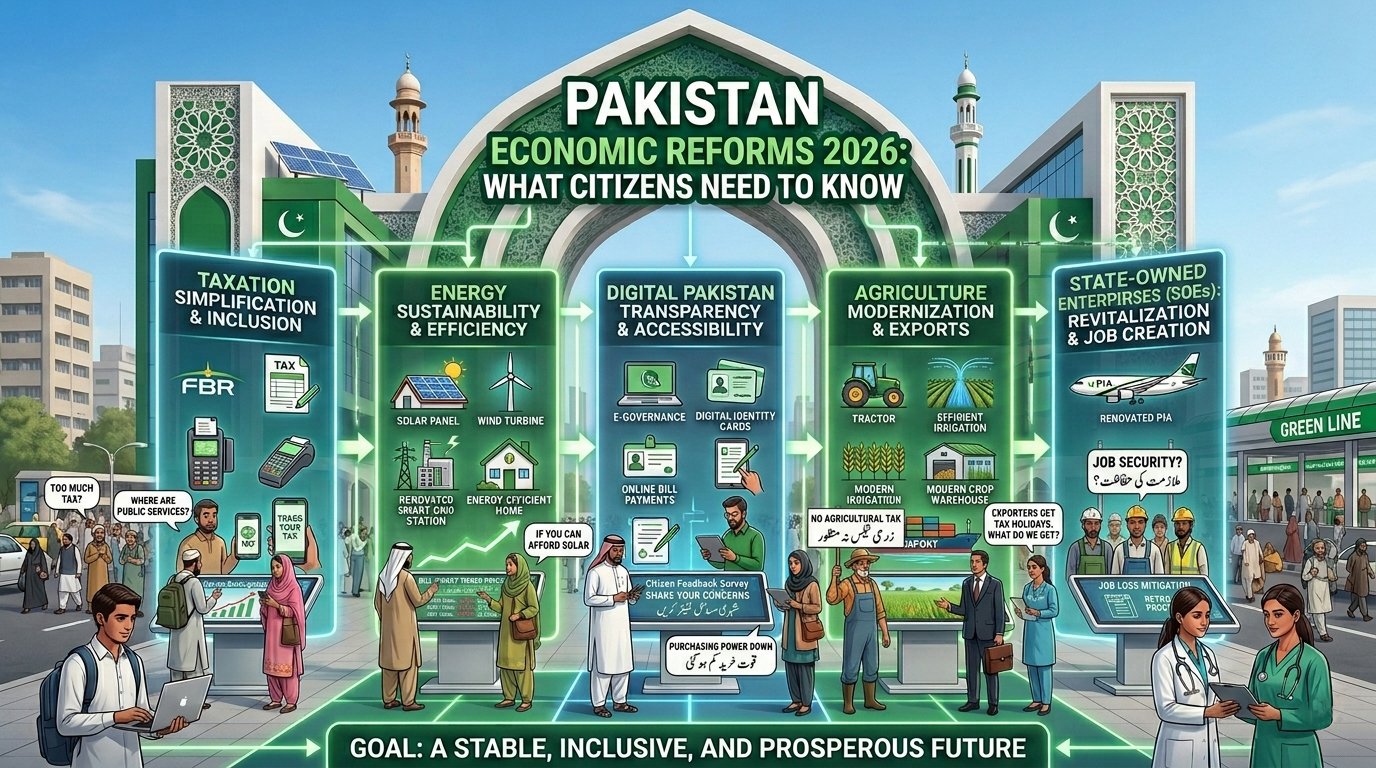




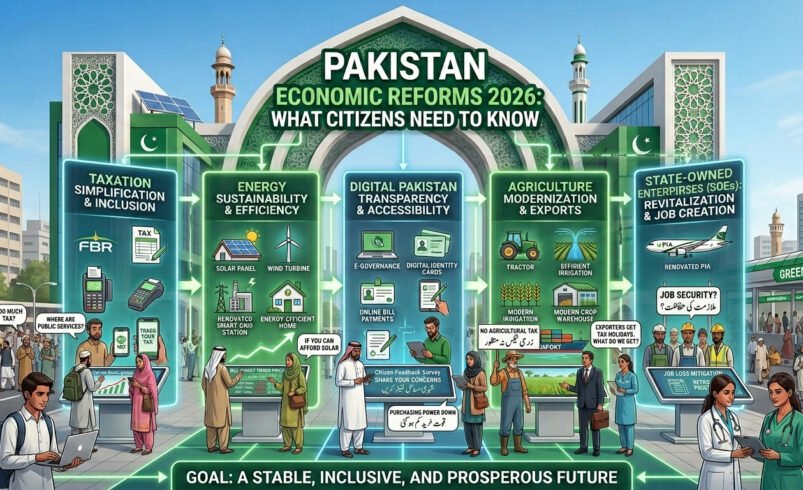
The year 2026 is a deal for Pakistan’s economy. A new wave of changes is happening. Pakistan Economic Reforms started in 2026. These reforms want to make the economy stronger to get more people to pay taxes and reduce borrowing from countries. For people, these changes bring good and terrible things. We can expect bills for things like electricity and gas. We will also have a more transparent business environment. It is important for investors and policymakers to understand what these reforms are about. This article will break down the parts of the reform package and what we can expect.
Background – Why Pakistan Needed Urgent Reforms in 2026
Pakistan’s economy has been weak for a time. We have problems like not people paying taxes a lot of debt in the energy sector and state-owned companies that are losing money. With a loan from the International Monetary Fund in 2024, things did not get better. By the end of 2025 prices were still extremely high. We were not getting enough money from people working abroad or from exports. The new reforms, made with the help of the International Monetary Fund and the World Bank, aim to fix these problems. These reforms are different from what we have done. They focus on being responsible for money privatizing companies and using technology. We have a six-year plan to make it all work.
Key Triggers for the 2026 Reforms
There were reasons why these reforms had to happen. The government was spending too much money, more than 7.5% of what we make as a country. We were also using over 60% of our money to pay back debts. The energy sector owed a lot of money over PKR 3.2 trillion. We were not getting enough investment from other countries, which was down 18% from the year before. These problems made the government realize that it had to make some decisions.
Core Components of the Pakistan Economic Reforms 2026
The Pakistan Economic Reforms are based on four ideas: changing the tax system making sense of energy subsidies privatizing state-owned companies and growing our exports. Each of these ideas will affect our lives and how well we will do overall.
- Tax Reforms – Broadening the Net
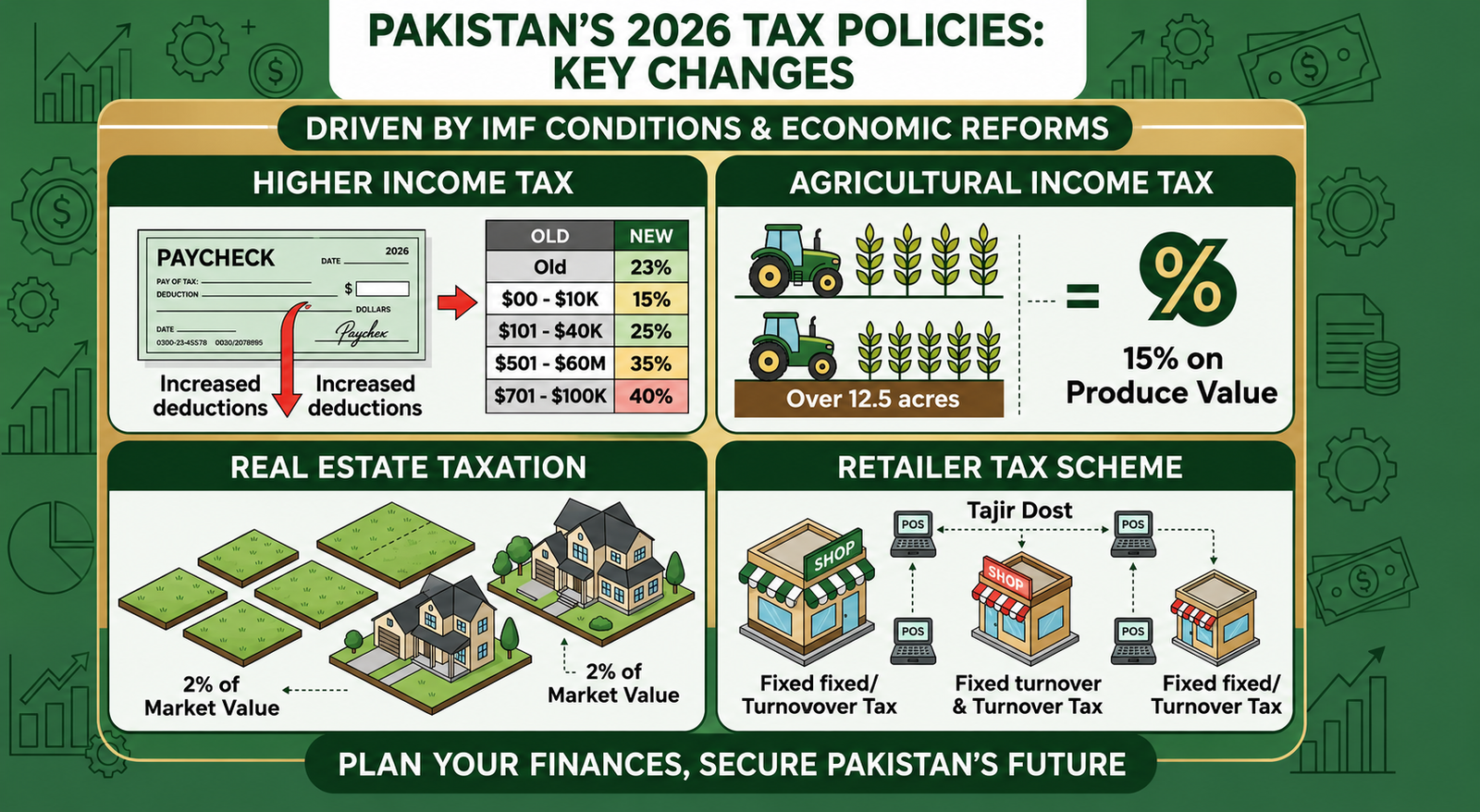
The Federal Board of Revenue is going to change the way it works. It will use technology first. Here are some key changes:
- We will have a tax rate of 17% on most goods and services.
- People who get a salary will have to pay income tax if they make more than PKR 600,000 per year.
- The tax on property will be based on its market value in big cities.
– People who own a lot of land more than 12.5 acres (about twice the area of the Lincoln Memorial Reflecting Pool) will have to pay tax on the income they get from farming.
Impact on Different Income Groups
- People who make less than PKR 50,000 per month will have 2% to 5% money to spend because they will pay more tax on basic things.
- People who make between PKR 50,000 and PKR 150,000 per month will have 6% to 9% money because they will pay more income tax and tax on goods and services.
- People who make more than PKR 150,000 per month will have 10% to 15% of money, but they might get better public services.
2. Energy Sector Reforms – End of Universal Subsidies
The government has introduced a system for electricity prices. If you use than 200 units of electricity per month you will pay a protected rate, which is subsidized. If you use than 400 units, you will pay a price that is based on the market. Prices for industries will depend on fuel prices.
Here is a simple graph to show how electricity prices will change:
- If you use 0-200 units, the price will go up by 2.7% from 18.5 PKR per unit to 19.0 PKR per unit.
- If you use 201-400 units, the price will go up by 20.5% from 22.0 PKR per unit to 26.5 PKR per unit.
- If you use 401-600 units, the price will go up by 30.8% from 26.0 PKR per unit to 34.0 PKR per unit.
- If you use than 600 units, the price will go up by 35.5% from 31.0 PKR per unit to 42.0 PKR, per unit.
People who use a lot of electricity will have to pay more. This will encourage people to use energy efficiently and consider using solar power.
3. Privatization of State-Owned Enterprises
The government of Pakistan is working on a plan to privatize some of the state-owned companies like Pakistan International Airlines and Pakistan Steel Mills. This plan also includes some power distribution companies. A new law has been passed to make this process easier. For the people of Pakistan privatization can mean some things. It can mean service when it comes to electricity and air travel. It can also mean that some people might lose their jobs. The government is going to help them by giving them training for new jobs. The prices of some things might go up because the new private companies will want to make a profit.
- Export and Remittance Incentives
The government of Pakistan wants to reduce its dependence on loans from the International Monetary Fund. So, it has introduced some policies to encourage exports and remittances. For example, new companies that export goods will not have to pay taxes for two years. Also people who send money back to Pakistan will get a bonus of 5% of the amount they send which will be added to their pension accounts.
Analysis – Projected Macroeconomic Impact
This shows what the government expects to happen to the economy of Pakistan in the few years.
Indicator 2025 Actual 2026 Target 2027 Forecast 2028 Forecast
- GDP Growth (%) 2.3 2.8 4.0 5.5
- Inflation (CPI, avg %) 23.8 19.5 12.0 7.5
- Fiscal Deficit (% of GDP) 7.6 6.2 4.9 3.8
- Public Debt (% of GDP) 78 76 72 66
- Tax-to-GDP Ratio (%) 9.1 10.4 11.5 13.0
- Foreign Reserves (billion USD) 9.2 12.5 16.0 22.0
Source: Ministry of Finance International Monetary Fund
Observations – Early Signs and Citizen Sentiment
The government has done some surveys to see how people are reacting to economic reforms. Some good things that people have noticed:
- 58% of people in cities like Lahore and Karachi say that they can now file their taxes online much faster.
- People are buying a lot of panels because they think the price of electricity might go up.
- Businesses that export goods are feeling more confident, and some new textile factories have been announced.
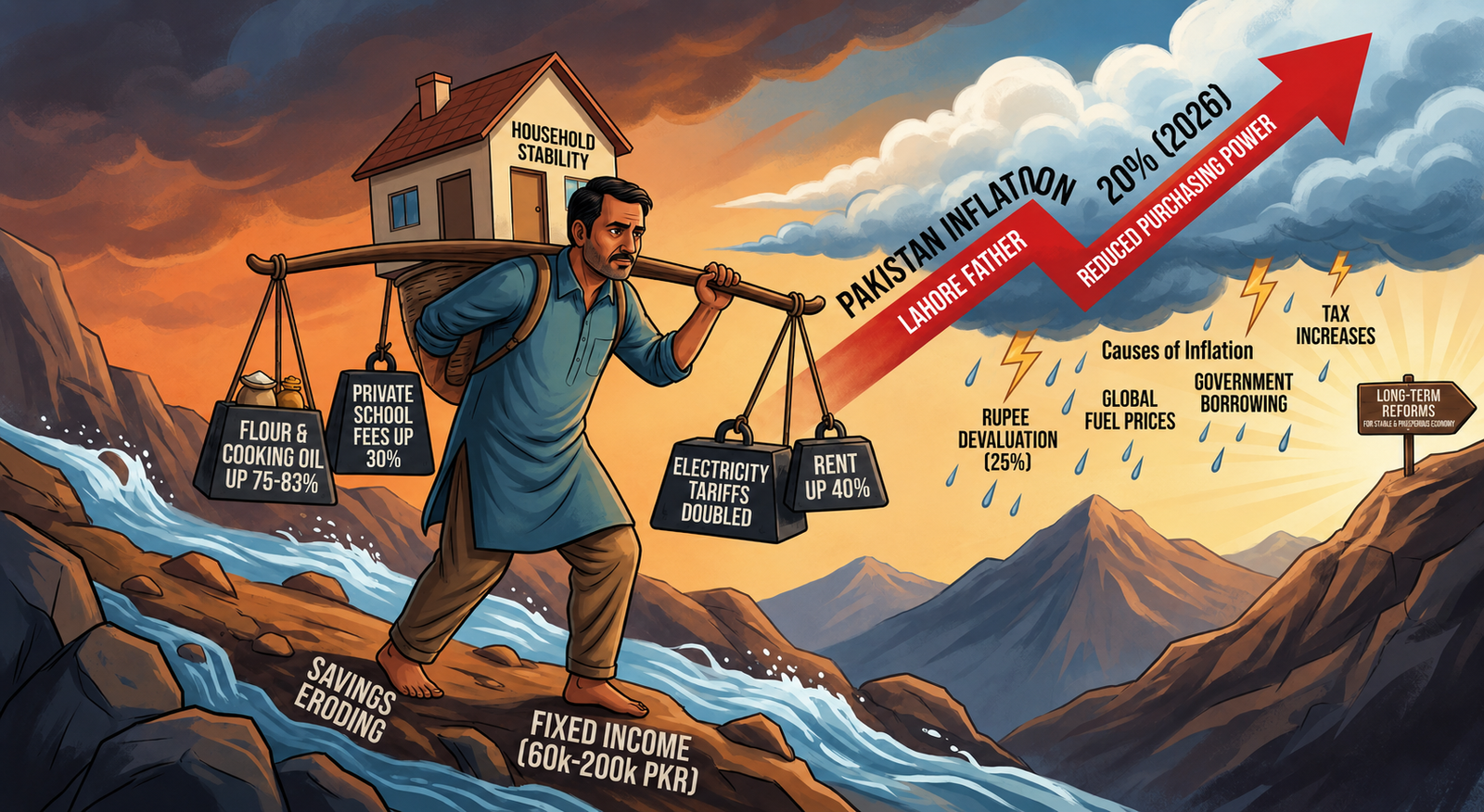
- 68% of middle-class households say that their purchasing power has decreased.
- Small shopkeepers are complaining that they must spend money complying with the new tax rules.
- Some farmers are protesting because they do not want to pay taxes on their farm income.
A key trend is that some small traders are trying to avoid paying taxes by doing business in the sector. The government is trying to stop this by sending tax facilitation vans to help people register their businesses and by offering amnesty to those who voluntarily register.
Practical Guide for Citizens – How to Navigate the Reforms
The government wants to help citizens navigate Pakistan economic reforms.
Salaried Individuals:
- You should check your withholding tax using the online calculator.
- You can increase your pension contributions and get a tax credit.
- If your income is above the new threshold, you can claim deductions for health or education expenses.
Small Business Owners:
- You can register for the Tajir Dost Scheme, which is a simplified tax regime for small businesses.
- You can install a cost point of sale system which is subsidized by the government.
- You can switch to payments which carry lower tax audit risk.
Households Facing Higher Utility Bills:
- You can apply for the Benazir Tahafuz Electricity Program if your electricity consumption is low.
- You can invest in panels which are now easier to install and have zero duty.
- You can switch to gas for cooking and heating, which has a lower tariff.
- For Young Job Seekers:
- You should focus on sectors that are growing like IT services, organization, and renewable energy.
- The government has launched the Kamyab Jawan Skill 2.0 program which offers certificates in AI, solar tech, and e-commerce.
Frequently Asked Questions (FAQs)
Q1: Will the Pakistan Economic Reforms increase poverty in the term?
A: Yes, the poverty rate might go up from 24% to 27% in 2026-27 because of inflation and job losses. The government is increasing the coverage of the Benazir Income Support Programme to help more families.
Q2: How does the IMF loan Pakistan relate to these reforms?
A: The International Monetary Fund provided some fiscal breathing space. The 2026 reforms are a condition for the tranche of the loan and for unlocking World Bank policy-based loans. Without these reforms, the International Monetary Fund program would be suspended, leading to a balance of payments crisis.
Q3: Will my savings in National Savings Schemes be safe?
A: Yes, the government has said that the reforms do not affect the money deposited in National Savings Schemes. Though the profit rates, on accounts have been reduced existing certificates will continue at the previously promised rates.
Q4: What happens to government employees’ pensions?
A: A new contributory pension system is being introduced for employees hired after July 1 2026. Existing employees will remain under the system and current pensioners will not be affected.