


When the Pakistan Super League kicked off in 2016 it was not clear how well it would do. The league had to move to the UAE because of security concerns. Today the Pakistan Super League is important commercially. It is an example of how a league can brand itself get investors to trust it and produce new ways to broadcast games. The story of the PSL commercial growth is not just about getting more sponsors. It is a plan for how a domestic T20 league can overcome problems by getting investors and becoming a major player in the global sports economy.
From the season when it was worth around 150 million to now when it is worth over 450 million the PSL commercial growth has been driven by record franchise auctions, multi-year title sponsorships and a growing digital presence. This growth has also created opportunities for people who like to analyze data and fans. For those who want to know more about team performance and player consistency, our guide to cricket betting tips is helpful. This article looks at the business side of the Pakistan Super League, the decisions that were made and what the future holds.
The Genesis: From Relocation to Resilience
The years of the Pakistan Super League were tough commercially. The first two seasons were played entirely in the UAE, which limited the money the league could make from tickets and fan engagement. But the Pakistan Cricket Board had a long-term plan: create a product that was so good that broadcasters and sponsors would pay a premium no matter where the games were played. By 2019, the league had its title sponsor, Habib Bank Limited, which paid around 6 million dollars per year. This amount more than doubled by 2025.
Some key decisions helped the Pakistan Super League grow commercially:
- The league sold all its rights together, which gave it more bargaining power.
- The player draft was televised, which made it exciting and turned player acquisition into content.
- The league has long-term agreements with companies like ARY Group, Omar Associates and Glaucon Group to own franchises.
By the season in 2020 the Pakistan Super League had broken even and was making a profit. The league was able to move the playoffs to Pakistan starting in 2017 and eventually hosted full seasons in the country by 2020. This was a turning point. Big crowds at stadiums in Karachi, Lahore and Rawalpindi changed the economics of game days. Created a cycle where higher attendance led to more broadcast appeal, which led to higher sponsorship bids.
Franchise Auctions: The Billion-Rupee Milestone
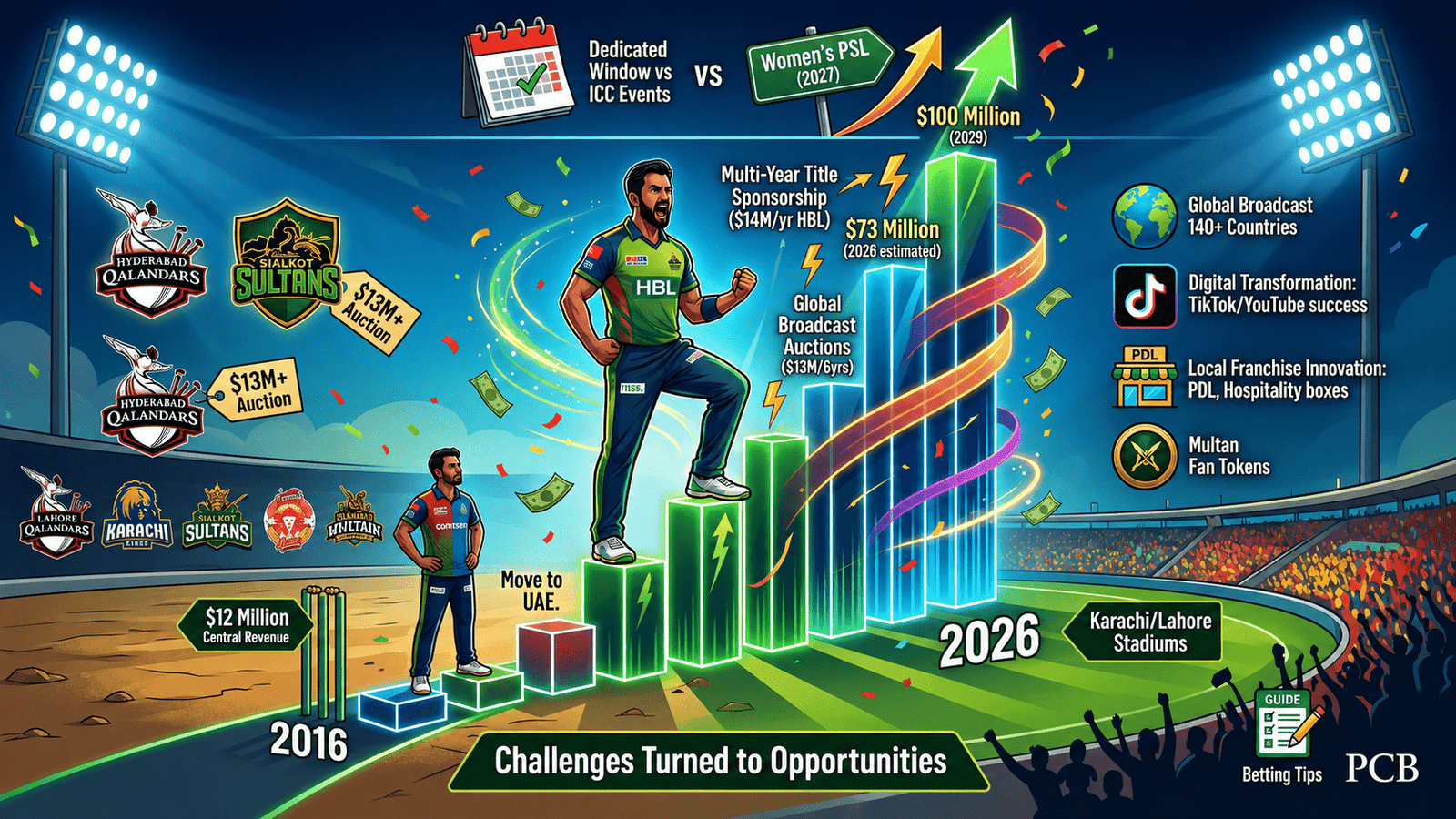
The dramatic sign of the PSL commercial growth came in January 2026 when the league announced it was expanding from six to eight teams. The auctions for the two franchises, Hyderabad and Sialkot, were a big success. The base price for a franchise had been set at around 3.9 million dollars. The final price for just two teams was over 13 million dollars, which was more than the total annual central rights revenue of the entire league in 2018. This showed that investors were confident in the PSL future.
Both new franchises agreed to build cricket academies and stadium infrastructure in their home cities, which helped the leagues commercial ecosystem. Existing franchises also saw their value increase a lot. According to a report from 2025 the average value of a Pakistan Super League franchise had grown to around 42 million dollars. Some teams, like the Lahore Qalandars and Karachi Kings, were even over 55 million dollars. This represents a growth rate of 19% per year since 2018 which is like the early growth of the Indian Premier League.
Sponsorship and Media Rights: The Twin Engines
To understand the PSL Commercial growth, we need to look at its sponsorship and broadcast deals. The current commercial cycle, from 2025 to 2028, has seen record-breaking numbers. The title sponsorship with Habib Bank Limited was renewed in 2025 for three years at 14 million dollars annually. This is a 133% increase from the 2019 deal. The title sponsorship now covers over 25% of the Pakistan Cricket Boards costs for the Pakistan Super League.The league also signed a broadcast deal in 2024 with a group that includes A Sports, PTV Sports, and international partners. The deal is worth around 85 million dollars over six years, which is up from 6 million dollars annually, in the previous cycle. Digital streaming rights were sold separately to Daraz and Tapmad adding another 3 million dollars annually.
Sponsorship Pyramid
The league has built a sponsorship model with levels:
- Tier 1 is the top level with one slot for a Title Partner, and it costs $14 million per year.
- Tier 2 has four slots for Associate Partners, and each slot costs between $2 million and $3 million per year.
- Tier 3 has eight to ten slots for Official Partners, and each slot costs between $0.5 million and $1 million per year.
- Tier 4 is for Licensing and Merchandise. It is a new way for the league to make money with around $2 million per year.
This model helps to reduce risk. Allow brands with different budgets to be a part of the league.
In the 2026 season, all the slots in Tier 2 and Tier 3 were sold out. There were five international brands waiting, including two from the UAE and one from China.
Global Broadcast Reach and Digital Transformation
- The league’s commercial growth has been driven by its distribution strategy. The league is now broadcast in over 140 countries. Around 350 million unique viewers watch it each season. Some key countries include India, where the league’s available on Disney+ Hotstar and Star Sports and it makes around $2 million per year.
- In the United Kingdom Sky Sports Cricket shows all the matches live and the highlights are on BBC platforms.
- In North America Willow TV has seen a 40% increase in viewership because of the Pakistani diaspora and new fans.
- In the Middle East and North Africa BeIN Sports has signed a four-year deal of $7 million.
The league’s digital platforms have been successful with its YouTube channel having over 4 million subscribers and match highlights being watched over 500 million times each season. The leagues TikTok account has 2.1 million followers, and its behind-the-scenes content is extremely popular more than the IPLs average. This digital approach has made it easier for international sponsors to join, like an electronics brand that signed a $500,000 deal for YouTube ads during the 2026 season.
Franchise-Level Commercial Innovations
While the central league manages the rights, individual teams have also driven commercial growth through local activations. The Lahore Qalandars team, owned by Rana Fawad, started a T20 tournament called the Player Development League, which finds new talent from remote areas of Punjab. This initiative got sponsorship from Pepsi and Engro. It made $2 million in revenue while building a loyal local fan base. The Qalandars team also launched the ever PSL franchise-owned merchandise store, with physical and e-commerce sales, and it makes around $1.2 million per year.
The team has been successful in building a fan base and making money through local activations. The Lahore Qalandars team is an example of how individual teams can drive commercial growth through innovative local activations. Karachi Kings have done something cool with corporate hospitality. They turned the National Stadium into a place for events and made corporate boxes and special packages that cost between PKR 250,000 and PKR 2 million for each match. In 2026, they made $2.5 million from hospitality and 92% of the boxes were sold for all the home games. Multan Sultans have a membership program.
How the PSL Commercial Revenue Has Grown
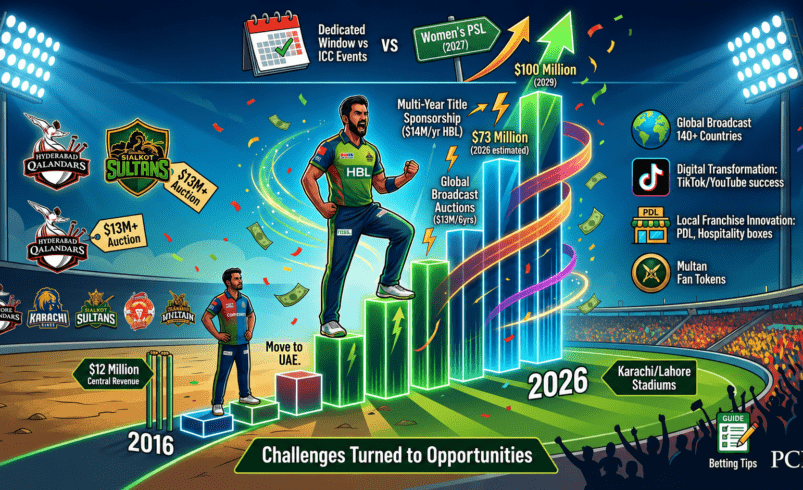
They started a blockchain-based fan token program in 2025, which is the first time a PSL team has done this. Over 50,000 fans bought tokens for 20 each, which raised $1 million for the team. The fans who bought tokens get to vote on things like what the teams’ jersey will look like the music they walk out to and even some big decisions about the game. These new ideas from the teams are adding around $8-10 million to the leagues money each year on top of what they already make. Here is a graph that shows how the PSLs commercial revenue has grown from 2016 to 2026:
Season | Central Revenue (USD Million)
2016 | 12
2017 | 15
2018 | 18
2019 | 22
2020 | 28
2021 | 34
2022 | 38
2023 | 45
2024 | 52
2025 | 61
2026 | 73 (estimated)
The PSL commercial Growth revenue has been growing fast with a 19.7% increase each year from 2016 to 2026. The biggest growth happened after 2022, when the league started playing seasons in Pakistan got a new broadcast deal and added two more teams. The PSL also needs to make sure the players are paid fairly. The salary cap for each team has been going up as the league makes money:
| Season Salary Cap per Team (USD) | Total Player Pool (USD) | Top Player Salary (USD) |
| 2016 | $1.2 million | $7.2 million |
| 2019 | $1.5 million | $9.0 million |
| 2022 | $1.9 million | $11.4 million |
| 2026 | $2.4 million | $19.2 million |
The PSL still faces some challenges.
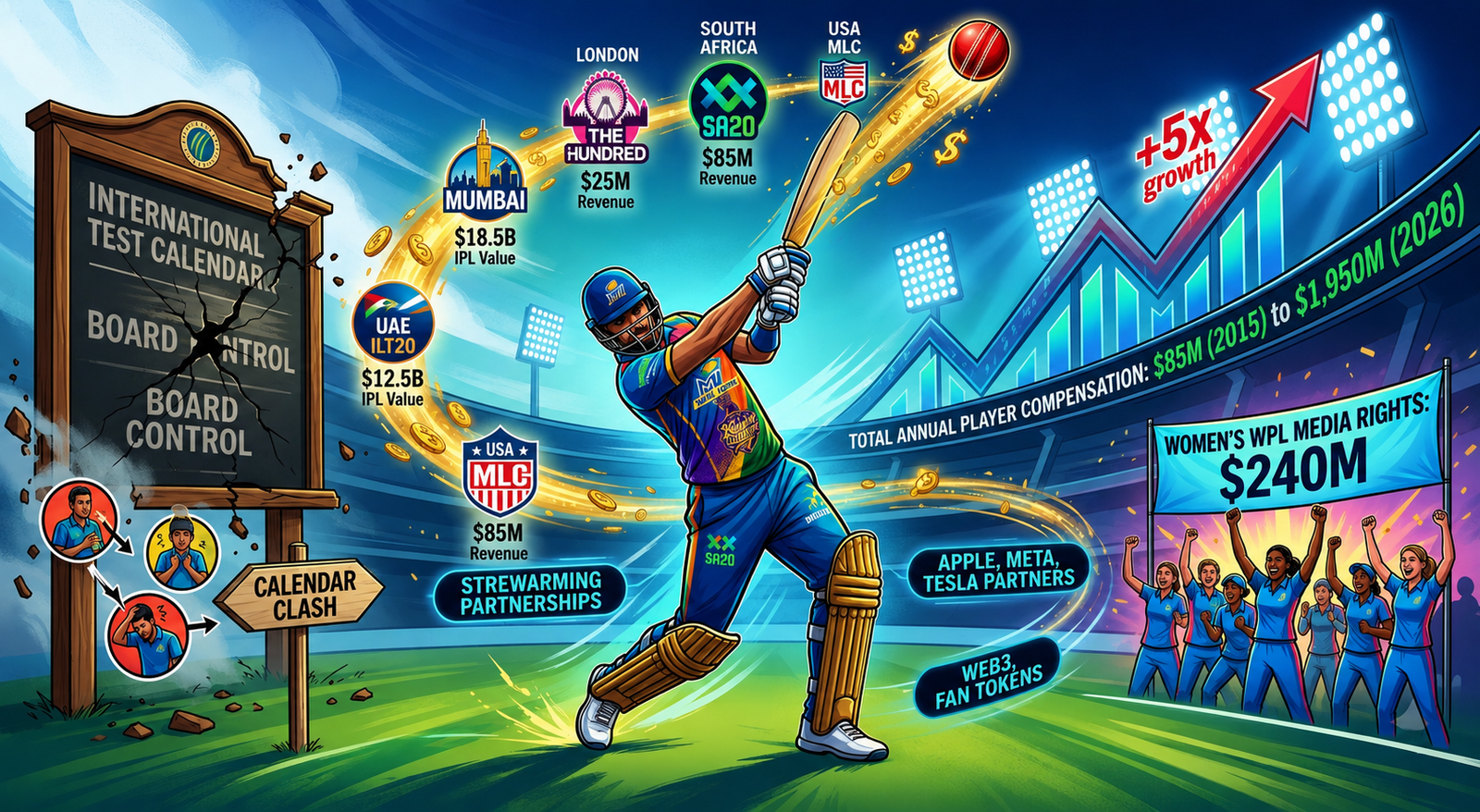
The league must compete with leagues like the IPL, SA20, and ILT20 for players. Some people still think it is not safe to play in Pakistan, which makes it harder to get sponsors and broadcasters. Not all the teams in the PSL are making money, which is a problem. The government also takes a lot of taxes from the teams, which reduces their profits. The Pakistan Cricket Board is trying to fix these problems. They want to move the PSL to a time of year, so it does not overlap with other leagues. They have also gotten tax exemptions for players, which will make the league more attractive to them.
Outlook: The Road to 100 million
The next three years will be important for the Pakistan Super League (PSL) to keep growing. The Pakistan Cricket Board (PCB) has a plan to help achieve this goal. Here are the key points:
- The PSL will have teams, nine or ten by 2028. The PCB is looking to add teams to cities like Faisalabad and Rawalpindi.
- A special PSL streaming app will be launched. This will help the league earn money directly from subscribers.
- PSL teams will tour countries, like the UAE, UK, and USA, to play exhibition matches. This will help increase the league’s popularity.
- A women’s PSL league will start in 2027 with four teams. This is expected to add $5-7 million to the league’s value in its second year.
The league will work with sportswear brands, like Puma and Li-Ning, to sell more merchandise. Financial experts at Deloitte Pakistan think that if the PCB follows this plan the leagues total central commercial revenue could reach $100 million by 2029. They also think that the value of each franchise will be around $70 million. This would make the PSL the most valuable T20 league in the world after the Indian Premier League (IPL).
Observations
The PSLs growth is an example of turning challenges into opportunities. The league started in the UAE. Now it has packed stadiums in Lahore. The central revenue has grown from $12 million to over $73 million. The auction of franchise Cricket in 2026 was successful with bids much higher than expected. This shows that investors think PSL is a growing league. One key reason for the PSLs’ success is the PCBs’ decision to manage rights while giving franchises freedom to operate. The league shares 65% of its central revenue with franchises, which motivates them to perform well. This balance of governance and franchise autonomy is a good model for other emerging leagues. However, the PSL needs to resolve its schedule conflicts with T20 competitions. If it can secure a window, from the ICC the PSL could become a truly global league.