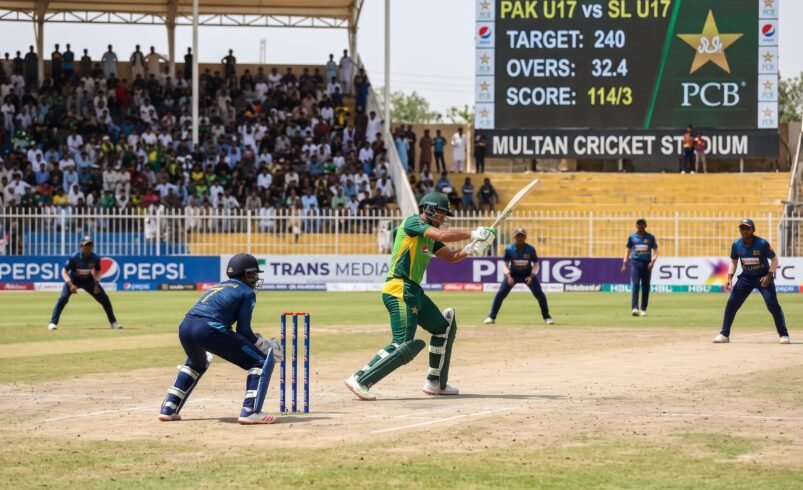
The Pakistan Under-17 cricket team faced an important challenge against Sri Lanka Under-17
at Multan Cricket Stadium. Sri Lanka set a target of 240 runs, putting Pakistan’s young players
in a position where strong batting would be essential. The match gave both teams a valuable
opportunity to showcase their skills and compete in youth cricket.
Sri Lanka established the 240-run target before Pakistan began its chase. Pakistan’s batters
needed to build partnerships and score steadily to keep their team on track. Careful shot
selection and good communication between players could play an important role in helping
Pakistan reach the required total.
The contest brought together young cricketers representing Pakistan and Sri Lanka in a
competitive sporting environment. Matches at this level help players gain experience and learn
how to perform under pressure. They also give coaches an opportunity to assess players’
abilities and identify promising talent for the future.
Chasing a target of 240 runs requires patience, teamwork, and consistent performance
throughout the innings. Pakistan needed to balance scoring opportunities with protecting its
wickets against Sri Lanka’s bowling attack. Strong partnerships could help the team maintain
momentum and move closer to the required total.
Multan Cricket Stadium provided the setting for this contest between the two Under-17 sides.
Youth cricket plays an important role in developing future international players by helping them
improve their techniques and understand match situations. These competitions also encourage
discipline, confidence, and sportsmanship among emerging cricketers.
However, the available match information does not confirm Pakistan’s final score or the result of
the contest. Details about leading performers and individual contributions have also not been
provided. The final result would establish whether Pakistan successfully chased the target or Sri
Lanka defended its total.
The match highlights the importance of providing young cricketers with opportunities to compete
and represent their countries. Such experiences can support their development and prepare
them for more demanding challenges in professional cricket.
Source: News Research