





Introduction: Why Technical SEO Is Your Secret Weapon
Let us get one thing straight. You can write the best content in your niche. You can build hundreds of backlinks. But if your site is a technical mess, none of it matters. That is where technical SEO basics come into play. Technical SEO is the hidden engine that helps search engines find, understand, and rank your pages. Without it, even brilliant content stays invisible. This guide breaks it all down in plain English. No coding degree is required. Simple steps backed by 2026 data.
The AI Shift No One Saw Coming
Search has changed more in the last year than in the previous decade combined. Gartner predicts search engine volume will drop 25% by 2026 because of generative AI. Google’s AI Overviews now appear in 47% of searches, according to a Search Engine Journal study. That means half of all searches show AI‑generated answers right at the top. Moz’s latest research suggests AI Overviews could slash organic traffic by 18% to 64%, especially for informational content. So, what does this mean to you? Your goal is no longer just ranking number one. It is becoming a trusted source that AI wants to cite. Technical SEO makes that possible by structuring your data clearly and helping machines understand your content without confusion.
Core Web Vitals: Google’s Speed Test
What Are Core Web Vitals?
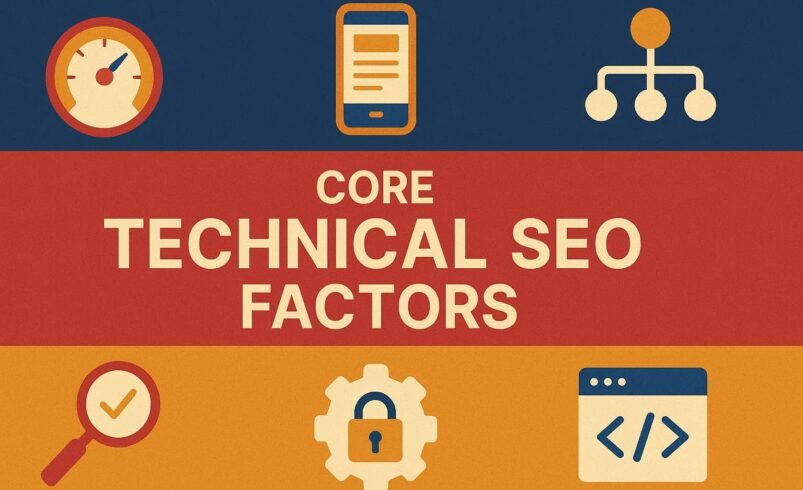
Google uses three specific metrics to measure how users experience your site. Largest Content Paint (LCP) tracks how fast your main content loads. It should be under 2.5 seconds. Interaction to Next Paint (INP) measures how quickly your page responds to clicks and taps. It must stay under 200 milliseconds. Cumulative Layout Shift (CLS) checks if your page jumps around while loading. A score under 0.1 means your layout is stable. These thresholds aren’t suggestions. Technical SEO Basics are official Google ranking factors.
The Numbers That Hurt
Here is the truth. As of November 2025, only 54.6% of websites meet the overall Core Web Vitals standards. That means nearly half of the web is failing Google’s basic test. Even worse, 40% of users abandon a page that takes more than three seconds to load. A one‑second delay can slash conversions by 20%. Every slow second is lost revenue walking out the door. Core Web Vitals act as a tie‑breaker between pages with similar content quality. If your content matches a competitor’s, the faster site wins every time.
How to Fix Common Speed Issues
Start by compressing all images. Use modern formats like Web or AVIF instead of JPEG or PNG. Implement lazy loading so images load only when users scroll to them. Minimize JavaScript that blocks rendering. Use CDN to serve content from servers closest to your visitors. Regularly test your site using Google’s Page Speed Insights tool. Small fixes add to massive improvements in both rankings and user experience.
Mobile‑First Indexing: The New Standard
Your Mobile Site Is the Only One That Counts
Here is something that surprises many beginners. Since March 2021, Google has used mobile‑first indexing for 100% of websites. That means Google only looks at your mobile version when crawling and ranking. Over 60% of global web traffic now comes from mobile devices. If your mobile experience is poor, you simply don’t rank. Period.
What AI Crawlers See Matters Too
This gets even more critical in 2026. Google’s AI crawlers like GPTBot and Perplexity Bot also access mobile‑rendered content when gathering information for AI responses. If your structured data is missing from your mobile version, AI systems may never discover or cite that content. That is a massive loss of potential visibility in AI Overviews and ChatGPT results. Ensure that all content, schema markup, and internal linking structures are identical between your mobile and desktop versions. Use responsive design rather than separate mobile URLs.
Crawlability: Letting Bots In
What Is a Crawl Budget?
Search engines don’t crawl websites forever. Crawl budget refers to the number of pages Google will scan on your site within a given time. If your crawl budget gets wasted on low‑value pages like filter URLs or parameter pages, your important content may never get indexed properly. For small sites under 10,000 pages, this is not a huge concern. But for large e-commerce or content sites, the crawl budget is precious.
Practical Fixes That Work
Block low‑value parameter URLs using your robots.txt file. Fix duplicate content issues by implementing canonical tags properly. Keep redirect chains to just 1‑2 hops maximum. Improve your server speed because faster responses mean more pages crawled per session. Run regular crawl stats audits in Google Search Console. Remove zombie pages that no longer serve any purpose. For high‑traffic websites, actively controlling what search engines see is not optional. It is essential for maintaining rankings.
Structured Data: Talking Google’s Language
Why Schema Markup Became Mandatory
Structured data is a code that tells search engines exactly what your content means. In 2026, this is no longer a “nice‑to‑have.” Both Google and Microsoft publicly confirmed that they use schema markup for their generative AI features. ChatGPT also confirmed that it uses structured data to determine which products appear in its results. That is a complete shift in how search discovery works. Schema markup now drives 20% to 40% higher click‑through rates through rich snippets. It powers inclusion in Google’s AI Overviews and directly influences whether your content gets cited by ChatGPT and Perplexity.
The Real Impact on Clicks
Industry data compiled across multiple studies shows rich results capture 58% of clicks on search results versus only 41% for non‑rich results. Google’s own case studies found that pages showing rich results saw an 82% higher CTR compared to standard listings. That difference separates revenue‑generating pages from those collecting dust. Add FAQ schema, How-to schema, and Article schema where relevant. Use JSON‑LD format for implementation. Validate your markup using Google’s Rich Results Test tool.
Wrapping It Up
Mastering technical SEO basics with Digital Agency Pakistan in 2026. It is the price of an entry. With AI Overviews reshaping search, mobile‑first indexing standard, and structured data powering AI citations, the rules have changed. Start with Core Web Vitals. Fix your mobile experience. Manage your crawl budget. Add schema markups where it matters. Small improvements compound into lasting visibility.